
Guide
A room-by-room look at office cleaning in Sacramento
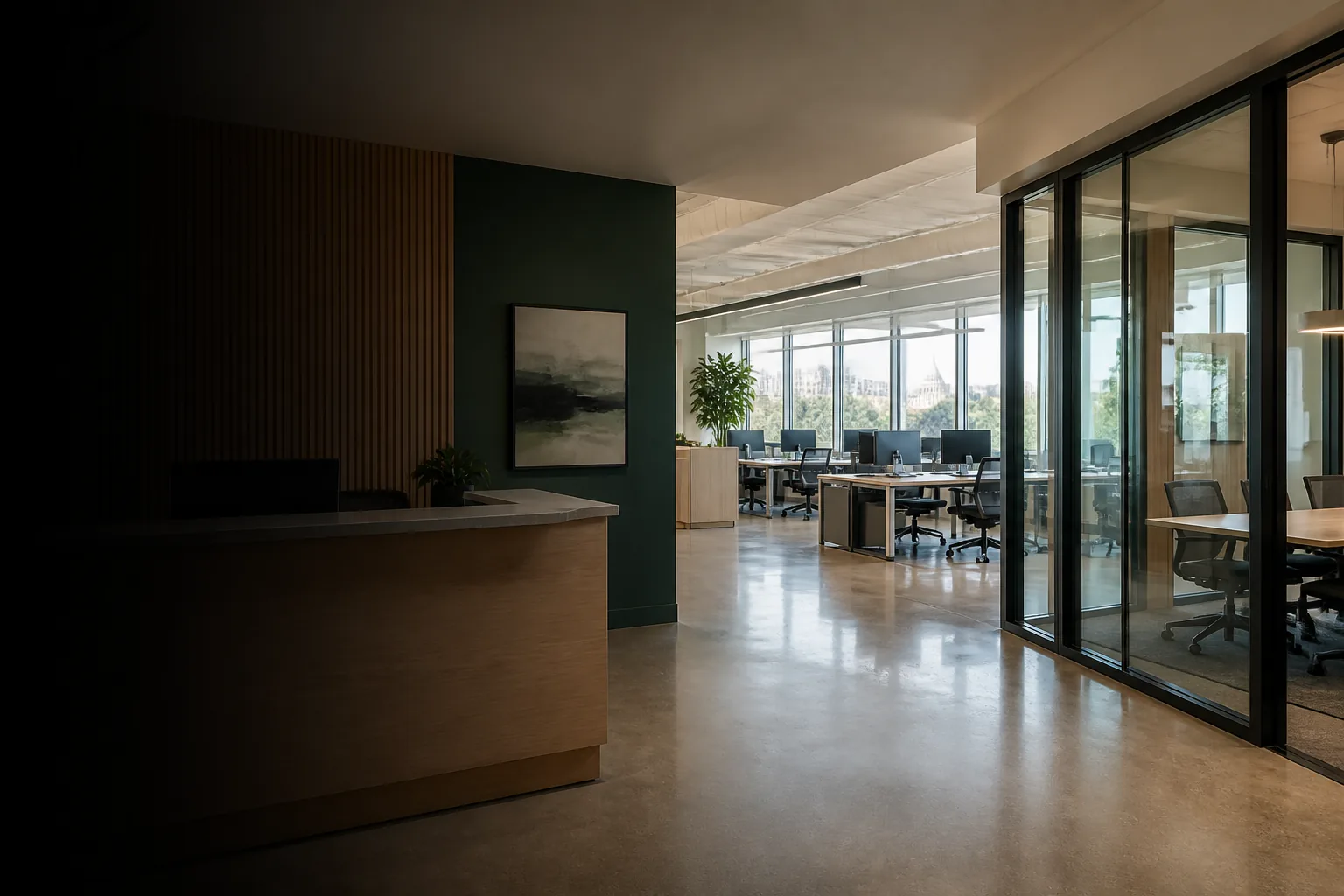
Office cleaning is easiest to buy when you can picture it room by room. This guide follows a typical Sacramento suite from the front door to the restrooms and shows what each visit covers, what happens periodically and what to tell the team.
Entry and reception
Reception is the room visitors judge first, so it gets attention on every visit. Entry glass and the interior glass near the door are wiped, the reception counter and seating surfaces are cleaned, waste is emptied and the floor is cared for according to its finish.
In a downtown professional suite or a suburban office-park lobby, reception often doubles as a waiting area. Tell us whether guests sit there for long stretches, because heavy use moves the seating and side tables higher up the list.
Entry mats belong in this conversation too. A mat catches the grit that would otherwise reach the carpet, and periodic mat cleaning keeps it doing that job.
Workstations, private offices and meeting rooms
A workstation visit is short: the bin is emptied, the clear part of the desk is wiped and the shared surfaces nearby get a pass. Let us know which desks are shared and which belong to one person, since that changes how much surface is open on a given night.
Private offices follow the same approach, with locked offices covered on the nights you arrange access. Meeting and conference rooms get their tables, chairs and interior glass cleaned and their bins emptied, and busy client-facing rooms are covered on every visit.
Hybrid offices in Rancho Cordova and downtown often rotate desk areas: the rooms in use that week are cleaned each visit, while empty rows of desks get a lighter pass. Frequency follows room use, which keeps the plan focused on the spaces people actually occupy. Offices inside warehouse buildings follow the same room list, with the extra timing around crews described in our guide to support spaces at working facilities.
Kitchens and breakrooms
The kitchen or breakroom is the hardest-working room in most offices. Every visit takes care of the counters, the sink, appliance fronts, tables and chairs, along with waste, recycling and a floor that collects more spills than any other in the suite.
Shared kitchens on a multi-tenant floor work differently from a private kitchenette inside your suite. Point out which one your staff use, and whether a busy lunch hour leaves it needing attention before the evening visit, so the plan matches how the room is really used.
Restrooms
Restrooms get a full clean on every visit: fixtures, counters, mirrors, partitions, waste and the floor. They are also where restocking matters most, so the paper products and soap included in your service are refilled before the team moves on.
In some high-rise buildings the restrooms on your floor belong to the building rather than to your suite. Tell us which restrooms are yours to include so the plan covers exactly the right rooms.
When restrooms take more traffic than an evening visit can keep up with, a day porter can check them during the day and keep the dispensers full until the nightly team arrives.
Floors and periodic work
Routine floor care runs through every room in the plan, with carpet vacuumed and hard floors mopped on each visit. That keeps soil from building up, but it is not a substitute for deeper periodic work.
Carpet in reception, corridors and busy offices benefits from commercial carpet cleaning on a periodic schedule, with hot water extraction booked over a weekend so it dries before Monday. Hard floors in kitchens and entries can be scrubbed through floor care, recoated or burnished, and worn finish can be stripped and rewaxed.
Ask for the periodic work to be listed alongside the recurring visits. Seeing both together makes it easy to plan the year and keeps the office cleaning routine focused on the everyday.
A few useful answers
Quick answers.
Which rooms are cleaned on every visit?
Reception, restrooms, the kitchen or breakroom and busy meeting rooms are covered on every visit. Lightly used private offices and spare rooms can follow a lighter cycle.
What counts as periodic rather than routine work?
Carpet extraction, floor scrubbing, recoating, burnishing and stripping and waxing are periodic. They run on their own cycle, usually while the office is closed.
How do we flag a room that needs extra attention?
Point it out on the walkthrough or leave a note before the next visit, and that room goes to the top of the list for the night.
Is a walkthrough part of every office quote?
Yes. Every quote includes an on-site walkthrough, where you can show the team each room and point out anything that needs particular attention.
Resources
Related guides
Services